






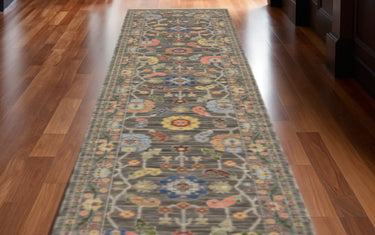
Runners live in the hardest-working parts of a house, which is why the wrong one wears out — or trips someone — within a season. Sizing is most of the battle.
Hallways: leave the border
Leave 4 to 6 inches of bare floor on each side of the runner, and 6 to 12 inches at each end. A runner that touches the baseboards makes a hallway feel narrower, not wider.
Measure the usable run first: stop short of doors that swing inward.


Kitchens: two runners beat one
In a galley kitchen, one runner in front of the sink and another in front of the range is more practical than a single long one — you can wash the one that takes the splashes.
Low pile, flat weave, and something with pattern. Solid cream in front of a stove is a brave choice.
Bedsides: 2.5 by 8 is the sweet spot
A runner on each side of a queen or king bed gives you something soft underfoot on both sides without buying a rug large enough to go under the whole bed.
Position them to start level with the nightstands and extend past the foot of the mattress.


Stairs: measure the tread and riser
Total length equals the number of steps multiplied by the combined depth of one tread plus one riser, then add extra for the landing. Add roughly 10 percent for waviness over the nosing.
Stair runners must be professionally fitted with pads and rods. This is the one rug you should not install yourself.
Shop the look
Shop runners from 6 feet to 30 feet, in every width and style.