
A mirror is the only piece of decor that adds square footage. But a mirror reflects whatever is in front of it — which is why placement matters more than the frame.
Put it perpendicular to a window, not opposite
Directly opposite a window bounces light straight back out. Perpendicular to it — on the adjoining wall — catches the daylight and throws it deeper into the room.
The reflection also gives you a second view of the garden or the street instead of a rectangle of glare.


Reflect something worth seeing
Before you hang it, stand where people usually sit and look at what will appear in the glass. A bookshelf, a piece of art, a plant — good. The back of a television or a doorway to the laundry — not good.
Height: center at 57 to 60 inches
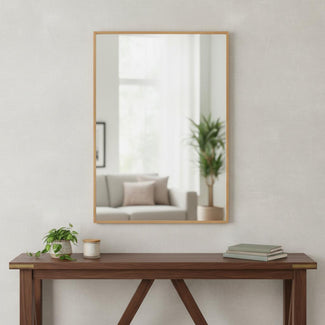
Same gallery-height rule as art. Above a console or vanity, leave 6 to 8 inches between the surface and the bottom of the frame.
In a dining room, hang a little lower — a mirror is more flattering when it catches seated eye level.
Go oversized in a small room
One large mirror beats three small ones. A floor mirror leaned against a wall in a narrow bedroom or entry does more for the sense of space than any amount of clever furniture arrangement.
Secure leaning mirrors to the wall with a strap. It takes two minutes and prevents an expensive accident.


Where not to hang one
Facing your bed, where a night-time reflection is startling rather than restful. Directly opposite a front door, which flattens the entry. And anywhere it reflects clutter you would rather not see twice.
Shop the look
Browse mirrors in every shape, from arched floor mirrors to round entry pieces.