

Pillows are the fastest way to change a room and the easiest place to overdo it. Designers work from a formula, not instinct.
The three-pattern rule
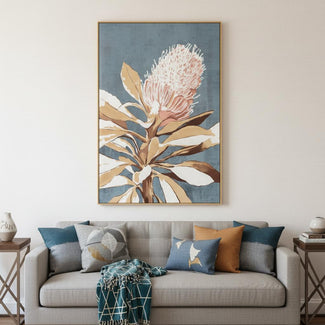
Pick one large-scale pattern, one small-scale pattern, and one solid or textured piece. The scale contrast is what keeps the group from competing with itself.
Draw all three from the same color family, with one shade repeating in each. That single repeated tone does the work of tying them together.


Size down as you go outward
Start with 22-inch or 20-inch pillows at the arms, then a 20 or 18 inside them, then a lumbar in the center. Descending sizes create depth; matching sizes in a row look like a hotel bed.
Buy inserts 2 inches larger than the cover. It is the difference between a plump pillow and a sad one.
Odd numbers on a sofa, even on a sectional
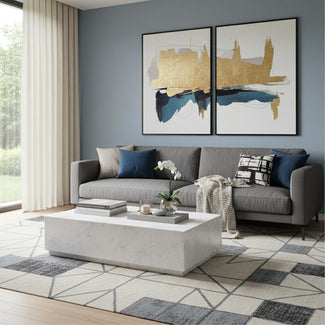
Three or five on a standard sofa. On a long sectional, work in pairs anchored at each end with a lumbar where the chaise meets the back.
If you cannot comfortably sit down without moving a pillow, there is one too many.


Texture is the part people forget
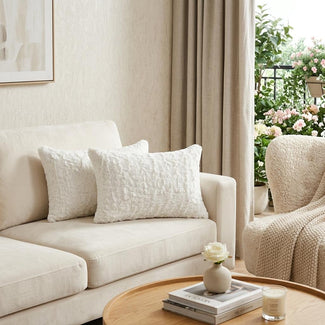
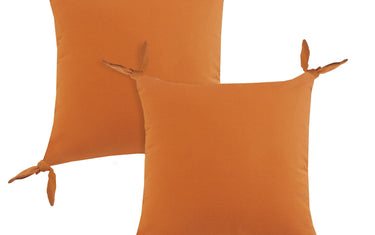
Color gets the attention, but texture is what makes a sofa look expensive. Mix a woven, a smooth cotton or linen, and something with a raised detail — embroidery, a knot, a fringe.
In winter, swap one pillow for a chunky knit and drape a throw over the arm. Two changes, whole new room.


Shop the look
Browse throw pillows and blankets by color, size and texture.